Vi Bilägare has completed their latest winter tyre test, evaluating seven dedicated Nordic friction tyres and one all-season tyre in size 225/45 R17. The reigning champion, Continental VikingContact 7, has been replaced by the VikingContact 8, which is tested against competitors from Goodyear, Michelin, Nokian, and Hankook. The test also included two budget tyres, Radar and Greenmax.
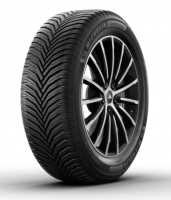
The inclusion of the Michelin CrossClimate 2 in this winter tyre test provides an interesting insight into the capabilities of modern all-season tyres in winter conditions. While the tyre demonstrated exceptional performance in wet conditions, significantly outperforming all winter tyres in wet braking and handling, its winter limitations were clear. On ice, the CrossClimate 2 showed very poor grip levels with braking distances nearly twice that of the best winter tyres. Snow performance, while better than ice, still fell well behind dedicated winter options.
The tyre's mixed performance led to an interesting result - despite its poor winter characteristics, strong wet and dry performance helped it outperform the budget winter tyres overall. However, the test highlights that while all-season tyres might work for drivers in milder regions who rarely encounter severe winter conditions, they're not a suitable replacement for Nordic winter tyres in areas where ice and snow are common. The CrossClimate 2 also showed the highest noise levels in the test, reflecting its stiffer, more summer-oriented construction.
Even with it's all season design goal, thanks to the huge lead it had in the dry and wet it got enough points to outscore two of the nordic winter tyres overall.
Dry
The Michelin CrossClimate 2 dominated this test with a stopping distance of 25.85m, significantly outperforming all winter tyres. The Greenmax LL Winter Ice I-15 performed worst, needing an additional 6.87m (26.6% longer) to stop.
Dry Braking
Spread: 6.87 M (26.6%)|Avg: 31.22 M
Dry braking in meters (80 - 5 km/h) [Average Temperature 16c] (Lower is better)
Dry Braking: Safety Impact: Best vs Worst Tyre
The testers didn't provide laptimes for dry handling, instead publishing subjective scores out of five.
Subj. Dry Handling
Spread: 4.00 Points (80%)|Avg: 3.38 Points
Subjective Dry Handling Score [Average Temperature 12.5c] (Higher is better)
Michelin CrossClimate 2
5.00 Points
Goodyear UltraGrip Ice 3
5.00 Points
Michelin X Ice Snow
4.00 Points
Hankook Winter I cept iZ2 W616
4.00 Points
Continental VikingContact 8
4.00 Points
Nokian Hakkapeliitta R5
3.00 Points
Radar Dimax Ice
1.00 Points
Greenmax LL Winter Ice I 15
1.00 Points
Wet
The CrossClimate 2 again led by a substantial margin, stopping in 27.49m. The Radar Dimax Ice performed worst, requiring 42.66m - a concerning 15.17m (55% longer) additional stopping distance.
Wet Braking
Spread: 15.17 M (55.2%)|Avg: 38.96 M
Wet braking in meters (80 - 5 km/h) [Average Temperature 14c] (Lower is better)
Wet Braking: Safety Impact: Best vs Worst Tyre
The CrossClimate 2 continued its wet weather dominance with the fastest lap time of 38.4 seconds. The Greenmax LL Winter Ice I-15 was slowest, taking 44.3 seconds - 5.9 seconds (15.4%) slower.
Wet Handling
Spread: 5.90 s (15.4%)|Avg: 41.79 s
Wet handling time in seconds [Average Temperature 9c] (Lower is better)
Michelin CrossClimate 2
38.40 s
Goodyear UltraGrip Ice 3
40.60 s
Continental VikingContact 8
41.20 s
Michelin X Ice Snow
41.70 s
Nokian Hakkapeliitta R5
41.70 s
Hankook Winter I cept iZ2 W616
42.50 s
Radar Dimax Ice
43.90 s
Greenmax LL Winter Ice I 15
44.30 s
The CrossClimate 2 showed exceptional aquaplaning resistance, maintaining grip until 86 km/h. The Radar Dimax Ice lost grip earliest at just 58.2 km/h, showing significantly worse water displacement.
Straight Aqua
Spread: 27.80 Km/H (32.3%)|Avg: 65.34 Km/H
Float Speed in Km/H [Average Temperature 6.5c] (Higher is better)
Michelin CrossClimate 2
86.00 Km/H
Goodyear UltraGrip Ice 3
68.50 Km/H
Michelin X Ice Snow
64.70 Km/H
Greenmax LL Winter Ice I 15
63.30 Km/H
Hankook Winter I cept iZ2 W616
62.40 Km/H
Nokian Hakkapeliitta R5
59.80 Km/H
Continental VikingContact 8
59.80 Km/H
Radar Dimax Ice
58.20 Km/H
Snow
The Goodyear UltraGrip Ice 3 led with 12.43m stopping distance. The CrossClimate 2 struggled, requiring 13.28m - the longest distance of all tested tyres.
Snow Braking
Spread: 0.85 M (6.8%)|Avg: 12.74 M
Snow braking in meters (35 - 5 km/h) [Average Temperature -7.5c] (Lower is better)
Snow Braking: Safety Impact: Best vs Worst Tyre
The Goodyear UltraGrip Ice 3 demonstrated best acceleration with 4.04 seconds. The Radar Dimax Ice was slowest at 4.46 seconds, while the CrossClimate 2 performed mid-pack.
Snow Traction
Spread: 0.42 s (10.4%)|Avg: 4.23 s
Snow acceleration time (5 - 35 km/h) [Average Temperature -7.5c] (Lower is better)
Goodyear UltraGrip Ice 3
4.04 s
Continental VikingContact 8
4.19 s
Hankook Winter I cept iZ2 W616
4.20 s
Nokian Hakkapeliitta R5
4.20 s
Michelin CrossClimate 2
4.21 s
Michelin X Ice Snow
4.23 s
Greenmax LL Winter Ice I 15
4.30 s
Radar Dimax Ice
4.46 s
The Goodyear excelled with a lap time of 79.6 seconds. The CrossClimate 2 was significantly slower at 84.7 seconds - the worst performer.
Snow Handling
Spread: 5.10 s (6.4%)|Avg: 81.38 s
Snow handling time in seconds [Average Temperature -6.5c] (Lower is better)
Goodyear UltraGrip Ice 3
79.60 s
Nokian Hakkapeliitta R5
79.70 s
Continental VikingContact 8
79.70 s
Michelin X Ice Snow
81.00 s
Hankook Winter I cept iZ2 W616
81.50 s
Radar Dimax Ice
81.80 s
Greenmax LL Winter Ice I 15
83.00 s
Michelin CrossClimate 2
84.70 s
Ice
The Michelin X-Ice Snow led with 10.69m. The CrossClimate 2 performed very poorly, requiring 18.39m - nearly twice the distance.
Ice Braking
Spread: 7.70 M (72%)|Avg: 14.35 M
Ice braking in meters (25 - 5 km/h) [Average Temperature -5.5c] (Lower is better)
Ice Braking: Safety Impact: Best vs Worst Tyre
The Michelin X-Ice Snow was fastest with 7.53 seconds. The CrossClimate 2 tied with Greenmax for worst performance at 13 seconds - 72% slower than the best.
Ice Traction
Spread: 5.47 s (72.6%)|Avg: 10.12 s
Ice acceleration time (5 - 25 km/h) [Average Temperature -5.5c] (Lower is better)
Michelin X Ice Snow
7.53 s
Nokian Hakkapeliitta R5
8.01 s
Continental VikingContact 8
8.44 s
Goodyear UltraGrip Ice 3
8.99 s
Hankook Winter I cept iZ2 W616
11.00 s
Radar Dimax Ice
11.00 s
Michelin CrossClimate 2
13.00 s
Greenmax LL Winter Ice I 15
13.00 s
The Continental VikingContact 8 was quickest with 64.6 seconds. The CrossClimate 2 was slowest at 72.8 seconds - 12.7% behind the leader.
Ice Handling
Spread: 8.20 s (12.7%)|Avg: 67.83 s
Ice handling time in seconds [Average Temperature -10c] (Lower is better)
Continental VikingContact 8
64.60 s
Nokian Hakkapeliitta R5
65.00 s
Goodyear UltraGrip Ice 3
66.40 s
Radar Dimax Ice
67.00 s
Michelin X Ice Snow
67.80 s
Hankook Winter I cept iZ2 W616
69.30 s
Greenmax LL Winter Ice I 15
69.70 s
Michelin CrossClimate 2
72.80 s
Comfort
The Goodyear UltraGrip Ice 3 was quietest at 71.5 dB. The CrossClimate 2 was loudest at 72.9 dB, reflecting its stiffer construction.
Noise
Spread: 1.40 dB (2%)|Avg: 71.95 dB
External noise in dB (Lower is better)
Goodyear UltraGrip Ice 3
71.50 dB
Hankook Winter I cept iZ2 W616
71.70 dB
Greenmax LL Winter Ice I 15
71.70 dB
Continental VikingContact 8
71.80 dB
Nokian Hakkapeliitta R5
71.90 dB
Radar Dimax Ice
72.00 dB
Michelin X Ice Snow
72.10 dB
Michelin CrossClimate 2
72.90 dB
Value
The Goodyear UltraGrip Ice 3 was most efficient at 5.25 L/100km. The Greenmax was worst at 5.6 L/100km, while the CrossClimate 2 tied with the Michelin X-Ice Snow at 5.45 L/100km.
Fuel Consumption
Spread: 0.35 l/100km (6.7%)|Avg: 5.41 l/100km
Fuel consumption in Litres per 100 km (Lower is better)
Goodyear UltraGrip Ice 3
5.25 l/100km
Nokian Hakkapeliitta R5
5.30 l/100km
Continental VikingContact 8
5.30 l/100km
Hankook Winter I cept iZ2 W616
5.40 l/100km
Michelin X Ice Snow
5.45 l/100km
Michelin CrossClimate 2
5.45 l/100km
Radar Dimax Ice
5.55 l/100km
Greenmax LL Winter Ice I 15
5.60 l/100km
19,000 km
£1.45/L
8.0 L/100km
--
Annual Difference
--
Lifetime Savings
--
Extra Fuel/Energy
--
Extra CO2
Estimates based on typical driving conditions. Rolling resistance accounts for approximately 20% of IC vehicle fuel consumption and 25% of EV energy consumption. Actual savings vary based on driving style, vehicle weight, road conditions, and tyre age. For comparative purposes only. Lifetime savings based on a 40,000km / 25,000 mile tread life.
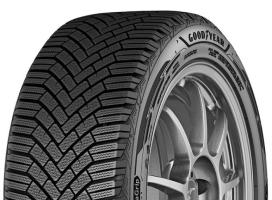
The Goodyear UltraGrip Ice 3 claimed victory with impressive overall performance. It showed class-leading wet road handling and aquaplaning resistance while maintaining high levels of snow grip. Despite prioritizing tarmac performance, it still delivered strong winter capabilities, though its ice performance fell slightly behind the best. Combined with low rolling resistance and good noise levels, it proved to be the best choice for drivers who spend more time on clear roads but still need reliable winter performance.
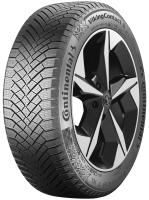
The Continental VikingContact 8, newly released with EV certification, secured second place. This updated model improved upon its predecessor's already strong reputation with better stability on tarmac, likely designed with heavier electric vehicles in mind. While ice grip remained good, particularly in terms of handling at the limit, it wasn't quite class-leading. Its main weakness was poor resistance to aquaplaning, but strong performance across other areas and excellent noise levels kept it near the top.
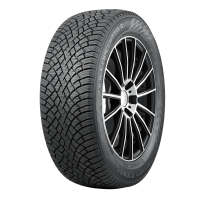
The Nokian Hakkapeliitta R5 took third place, dominating the winter conditions alongside Continental. It excelled in both ice and snow performance, offering the best cornering grip and proving particularly enjoyable to drive in winter conditions. However, its clear focus on winter performance led to compromises elsewhere - it struggled with aquaplaning resistance and showed only average performance on dry and wet tarmac, with slightly inconsistent steering feel.
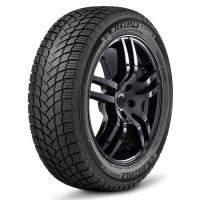
The Michelin X-Ice Snow finished fourth, standing out with excellent braking performance across all conditions despite being one of the harder tyres in the test and the only Nordic winter tyre rated above 200 km/h. However, it showed lower cornering grip than its competitors in both winter and summer conditions, with a tendency to break away more suddenly in corners. It offered good straight-line stability and linear steering feel on tarmac but responded more sluggishly under pressure.
The Hankook Winter i*cept IZ2 W616, launched in 2016, showed its age with a fifth-place finish. While offering good straight-line stability on tarmac and low noise levels, it struggled to balance winter and tarmac performance. Ice grip was notably behind premium competitors in both braking and cornering, and while dry road steering feel was good, overall grip levels couldn't match the best performers.
The Michelin CrossClimate 2 all-season tyre demonstrated its split personality in the test. It dominated wet road performance and showed excellent dry road behavior, but struggled severely on ice and showed compromised snow performance. While it outperformed budget winter tyres overall, its winter limitations make it suitable only for drivers who can avoid driving in icy conditions.
The Radar Dimax Ice performed poorly overall, though showed reasonable ice grip thanks to its soft compound. However, it failed in most other areas with extended braking distances on both wet and dry surfaces, early aquaplaning, high noise levels, and unpredictable handling under pressure. Despite its low price point, its limited capabilities make it poor value.
The Greenmax Winter Ice I-15 finished last, showing almost no redeeming qualities beyond low noise levels and decent aquaplaning resistance. Its relatively hard compound delivered ice grip barely better than the all-season tyre, and it showed dangerous handling characteristics with sudden breakaway on both snow and ice. Extended braking distances, poor handling on dry roads, and high rolling resistance confirmed its position at the bottom of the test.





Discussion